A Historic South L.A. Church Burned for the Third Time. Neighbors Had Warned About It for Years

LOS ANGELES: The former Crouch Memorial Pentecostal Church of God in Christ was already a wounded landmark when flames tore through it before dawn Monday. By the time firefighters reached the 2600 block of South Paloma Street, the vacant wooden structure was fully involved. Wind pushed embers toward nearby homes, turning a long-running neighborhood concern into a major emergency within minutes.
The Los Angeles Fire Department said nearly 200 firefighters surrounded the property and worked from a defensive position because earlier fires had left the building dangerously unstable. Ladder pipes and heavy streams kept the blaze from spreading through the block. The fire was knocked down in less than two hours, and officials reported no injuries to residents or firefighters.
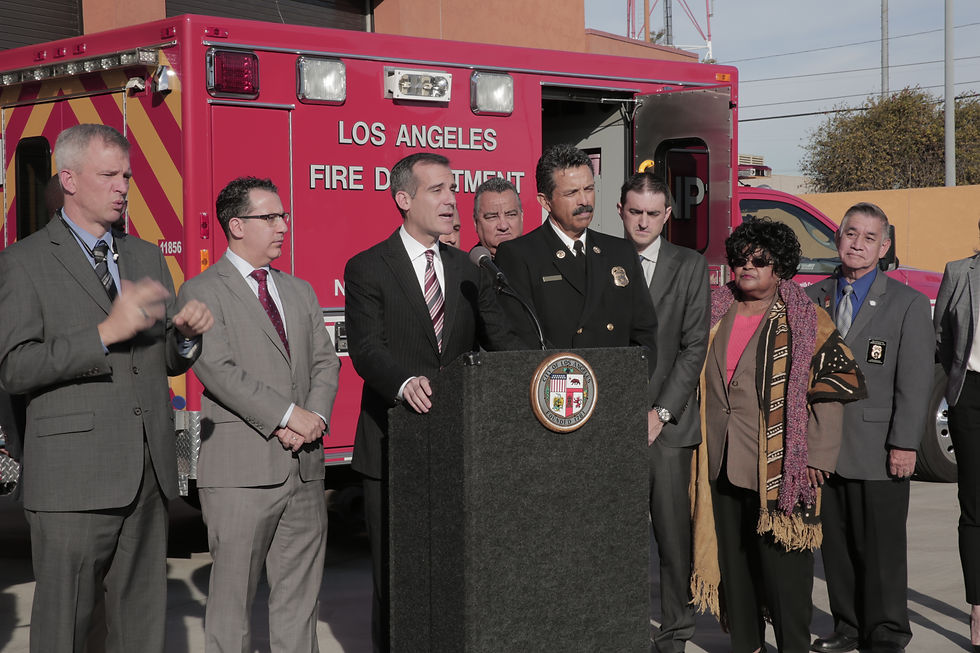
Los Angeles firefighters contained the wind-driven South L.A. church fire without reported injuries. File photo. Image: Eric Garcetti / CC BY 2.0
The building was not simply another abandoned structure. Constructed in the late nineteenth century and long associated with a Black congregation, it carried architectural and community history even after regular worship ended. That history makes the loss painful. It also sharpens the question neighbors have asked for years: how did a known hazard remain standing long enough to burn a third time?
A 2013 fire, attributed by officials to a wall heater, caused a roof collapse and briefly trapped two firefighters. Another major blaze struck in May 2024. The church remained vacant and badly compromised afterward. Residents told local news organizations that trespassing, unsecured openings and repeated calls for action had become part of life around the property.
Investigators have not announced a cause for Monday’s fire. Because the incident involved a house of worship, the LAFD Arson Counter-Terrorism Section took the lead, a step the department described as part of its investigative responsibility. That does not establish that the fire was deliberately set. Officials are examining the origin, reviewing neighborhood footage and asking anyone who saw suspicious activity before 3:30 a.m. to come forward.
The distinction matters. A dramatic scene can produce fast theories, especially when a landmark has burned before. The verified facts are serious enough without guessing: the structure was vacant, previously damaged, engulfed when crews arrived and dangerous enough to require exterior operations. The investigation must determine how the fire began and whether a person played any role.
City building officials were called as the remaining frame failed. Heavy equipment began taking down unstable sections while firefighters maintained a watch and searched as demolition progressed. The Red Cross assisted two adults and three children, although the fire department said no residents were displaced. The closest homes survived because crews stopped the embers and radiant heat from becoming a neighborhood fire.
The episode exposes a difficult preservation problem. Historic status can recognize a building’s value, but recognition alone does not secure it, repair it or remove a public danger. Once fire, weather and neglect weaken a structure, every delay makes restoration harder and emergency work riskier. Owners, preservation advocates and city agencies can have different legal powers, timelines and resources while the block lives with the result.
For South Los Angeles, the next questions extend beyond the official cause. Residents deserve a clear account of prior inspections, orders, ownership responsibilities and attempts to secure the site. If the building could no longer be saved, the public should understand when that conclusion became unavoidable. If earlier intervention was possible, the city should explain why it did not happen.
There is also a lesson for the many congregations caring for older buildings across Los Angeles. Historic structures can require expensive electrical, roof and seismic work even while membership and neighborhood economics change. Preservation programs are most useful before damage becomes catastrophic. Clear points of contact, realistic funding and enforceable security plans can keep a treasured property from drifting between private responsibility and public danger.
The fire erased much of what remained of Crouch Memorial, but it should not erase the record around it. A landmark can be lost in one morning after years of warning signs. Investigators now have to determine what ignited the building. City leaders have a broader job: show how Los Angeles will prevent the next treasured but abandoned property from becoming both a ruin and an emergency waiting for wind.


Comments