LAX People Mover Slips to 2027 as Testing and Contract Disputes Continue

LOS ANGELES — Travelers waiting for the long-promised train at Los Angeles International Airport will have to wait longer. The airport’s automated People Mover, now branded SkyLink, is no longer expected to open in 2026. The contractor’s latest schedule points to January 2027 at the earliest, extending a delay that has already pushed the 2.25-mile electric system years beyond its original target.
The train is meant to connect LAX terminals with parking, ground transportation and the consolidated rental-car facility, reducing the need for buses and private vehicles inside the airport’s crowded central terminal area. That promise explains why each delay lands so heavily. The project is not an optional attraction; it is the central organizing feature of a broader airport access plan that has already changed where passengers transfer.
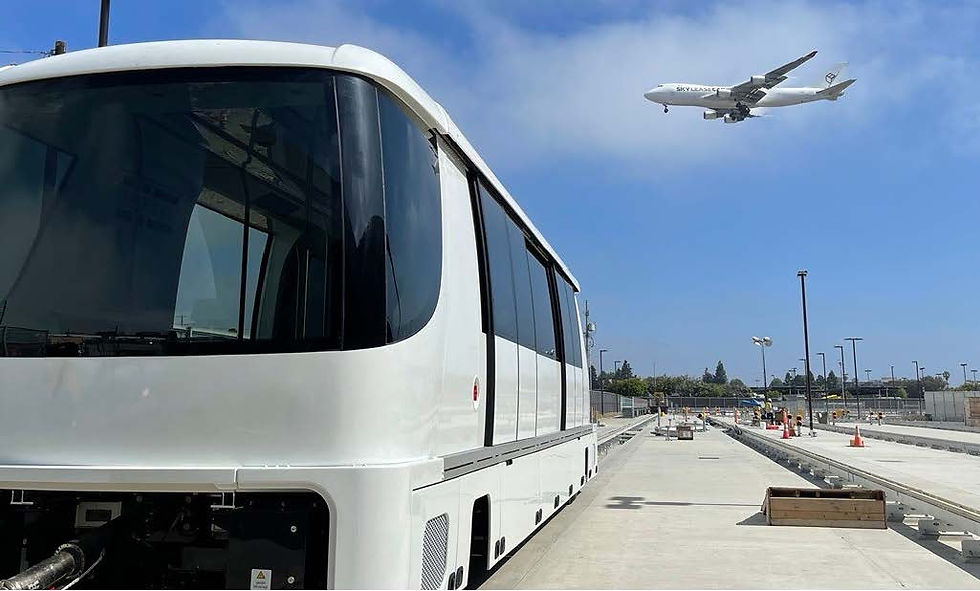
The LAX Automated People Mover must complete consecutive testing and safety reviews before carrying passengers. Image: Los Angeles World Airports / Public domain
Before public service can begin, the system must complete a demanding sequence of testing. Reports from the Los Angeles Times, CBS Los Angeles and LAist say the train still needs 30 consecutive days of successful system demonstration, followed by independent review and an assessment by Los Angeles World Airports. A problem serious enough to interrupt the sequence can force portions of the test to restart.
LAWA has emphasized that it will not authorize passenger service until safety and reliability requirements are satisfied. That position is necessary for an automated system expected to operate continuously around active airport infrastructure. It also leaves travelers without a firm opening date, because the remaining work depends on performance rather than a ribbon-cutting deadline.
The schedule is complicated by a legal and contractual dispute between the city and LINXS, the private consortium responsible for building the system. LINXS has sued Los Angeles, arguing that LAWA contributed to delays and costs. City officials and oversight discussions have focused on testing, systems integration, maintenance duties and change orders. Those questions will be resolved through contracts and courts, not through the daily experience of passengers.
For travelers, the practical reality remains the existing shuttle network. Passengers connecting between the LAX/Metro Transit Center, rental cars, economy parking and terminals should continue to allow extra time and check current airport guidance before leaving. The train’s infrastructure may appear nearly complete from outside, but visible construction progress is not the same as operational certification.
The delay also compresses the calendar before major events. A January 2027 opening would place SkyLink only weeks ahead of Super Bowl LXI at nearby SoFi Stadium, while the 2028 Olympic and Paralympic Games loom as a larger test of regional transportation. Los Angeles is preparing local businesses for its next wave of global events, but the airport system must prove it can handle ordinary days before it is asked to support extraordinary crowds.
Cost is another reason the schedule matters. Public records and oversight motions have documented a project value of roughly $3 billion and substantial increases from earlier plans. Every extension raises questions about staffing, operations, financing and responsibility for additional work. Accurate accounting is essential because the People Mover is both a public asset and a long-term operating commitment.
The project’s value has not disappeared because its opening moved. A reliable train could still improve transfers, reduce terminal traffic and make rail access to LAX more coherent. The city’s major-event calendar is already changing how agencies plan, and completing SkyLink safely remains more useful than opening it prematurely. The public, however, deserves schedules that distinguish an achievable forecast from an aspirational one.
The next credible milestone is not another announcement; it is a completed testing record that can withstand independent review. Until then, passengers should plan around the airport they have rather than the airport shown in renderings. Airlines, hotels and travel planners should also avoid promising a rail connection until service is formally authorized. When SkyLink finally opens, its success will be measured less by the years of delay than by whether it works consistently enough for travelers to stop thinking about it at all.


Comments