Century Old Water Pipe Failure Exposes Los Angeles Infrastructure Challenges

17 July 2026
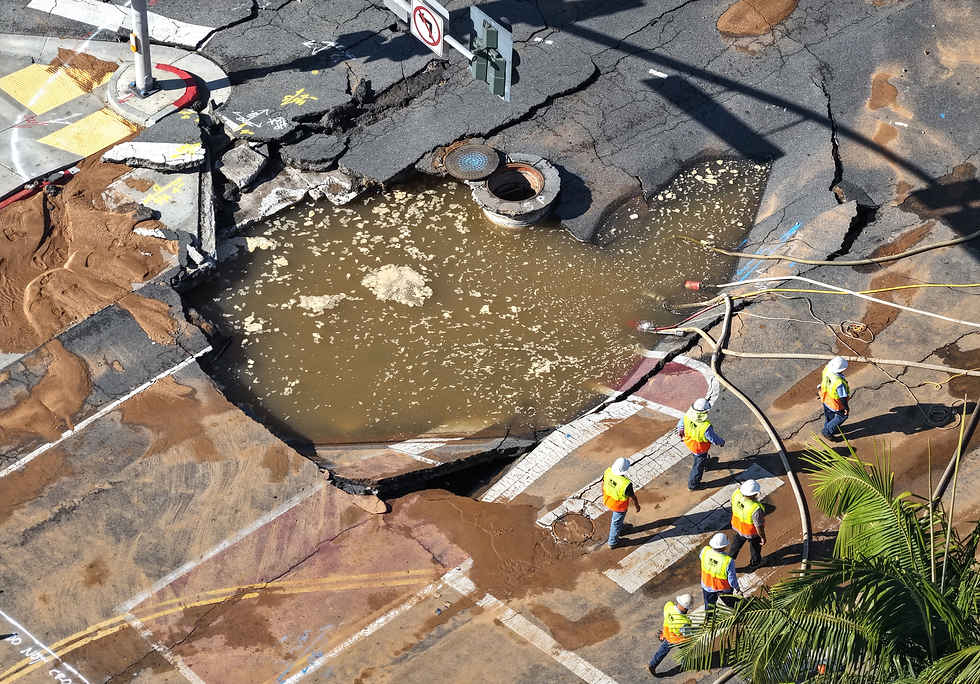
A dramatic new image released by officials has revealed the extensive damage caused by the catastrophic rupture of a century old water pipe beneath West Hollywood, offering a closer look at the infrastructure failure that flooded streets, damaged businesses and disrupted one of Los Angeles County's busiest neighborhoods. The striking photograph, showing the massive steel pipe torn apart beneath the roadway, has become a powerful reminder of the growing challenges posed by aging public infrastructure.
The rupture occurred early Thursday morning near the intersection of Sunset Boulevard and Holloway Drive, where a 36 inch riveted steel trunk line installed in 1916 suddenly burst beneath the pavement. Millions of gallons of water surged through the streets, transforming sections of West Hollywood into fast moving rivers within minutes. Water rushed into underground parking garages, flooded businesses and left vehicles stranded as emergency crews raced to shut off the damaged pipeline.
The newly released photograph captures the enormous force of the rupture. The thick steel pipe appears twisted and ripped open, exposing the decades of wear hidden beneath the city's streets. Engineers examining the damaged section described it as one of the most significant water main failures Southern California has experienced in recent years. While investigators have not yet determined the exact cause, officials believe the pipe's advanced age likely played a major role in the failure.
The flooding created widespread disruption across the surrounding neighborhood. A large sinkhole formed near Sunset Boulevard, forcing authorities to close several major roads while emergency crews assessed the damage. Metro bus operations were interrupted after floodwaters inundated a nearby transit facility, while restaurants, shops and apartment buildings suffered varying degrees of water damage. Fortunately, no serious injuries were reported despite the scale of the incident.
Officials from the Los Angeles Department of Water and Power confirmed that the damaged trunk line had already been identified as a high priority replacement project. The utility had allocated funding to replace more than six miles of the aging Sunset Trunk Line as part of a long term infrastructure modernization program. However, the replacement remains in the design phase, with construction not expected to begin until 2031 under the current schedule.
Los Angeles Mayor Karen Bass visited the site shortly after the rupture and pointed to the incident as evidence of the urgent need for infrastructure investment. She noted that many of the city's major water pipes are now more than 100 years old, making failures increasingly likely as the system continues to age. Utility officials echoed those concerns, explaining that while crews replace dozens of miles of pipeline each year, thousands of miles of aging water infrastructure still remain underground.
Experts say water main breaks often occur during overnight hours because water demand is lower, allowing pressure inside the system to build. If corrosion or structural weakness has developed over decades of service, the additional pressure can expose those vulnerable areas and cause sudden ruptures. Engineers are continuing to inspect nearby sections of the pipeline to determine whether additional repairs will be necessary.
The incident has also renewed discussion about the financial challenges of replacing aging infrastructure across major American cities. Large trunk lines like the one that failed beneath Sunset Boulevard require years of planning, environmental review and funding before construction can begin. While utilities prioritize projects based on age, leak history and engineering assessments, replacing every aging pipe simultaneously is financially impossible for most municipalities.
Cleanup crews have spent days removing debris, repairing damaged roads and restoring normal traffic patterns. Businesses affected by the flooding continue assessing losses, with several remaining temporarily closed while repairs are completed. Utility officials have assured residents that drinking water remains safe and that crews are working around the clock to restore the damaged infrastructure as quickly as possible.
The dramatic image of the ruptured steel pipe has become more than just a photograph of a broken water line. It serves as a visual reminder of the hidden infrastructure supporting modern cities and the consequences when systems built generations ago reach the end of their lifespan. As Los Angeles continues planning billions of dollars in future infrastructure upgrades, the West Hollywood water main failure may ultimately become a defining example of why those investments can no longer be delayed.


Comments